Realtors

New Residents

Dealing with Drilling and Pecking Birds: Protect Your Castle Pines Home Safely

Living in The Village at Castle Pines connects us deeply with nature, bringing a wonderful variety of local birds right to our doorsteps. However, when those feathered neighbors start drilling or pecking at your house, it can quickly become a frustrating issue. Understanding why these birds display this behavior and learning how to safely deter them can help keep your home’s exterior intact while respecting our local ecosystem.

Why Birds Drill or Peck at Your House

Before trying to stop the behavior, it helps to understand what the birds are trying to accomplish. Typically, drilling and pecking boil down to three main biological drivers:

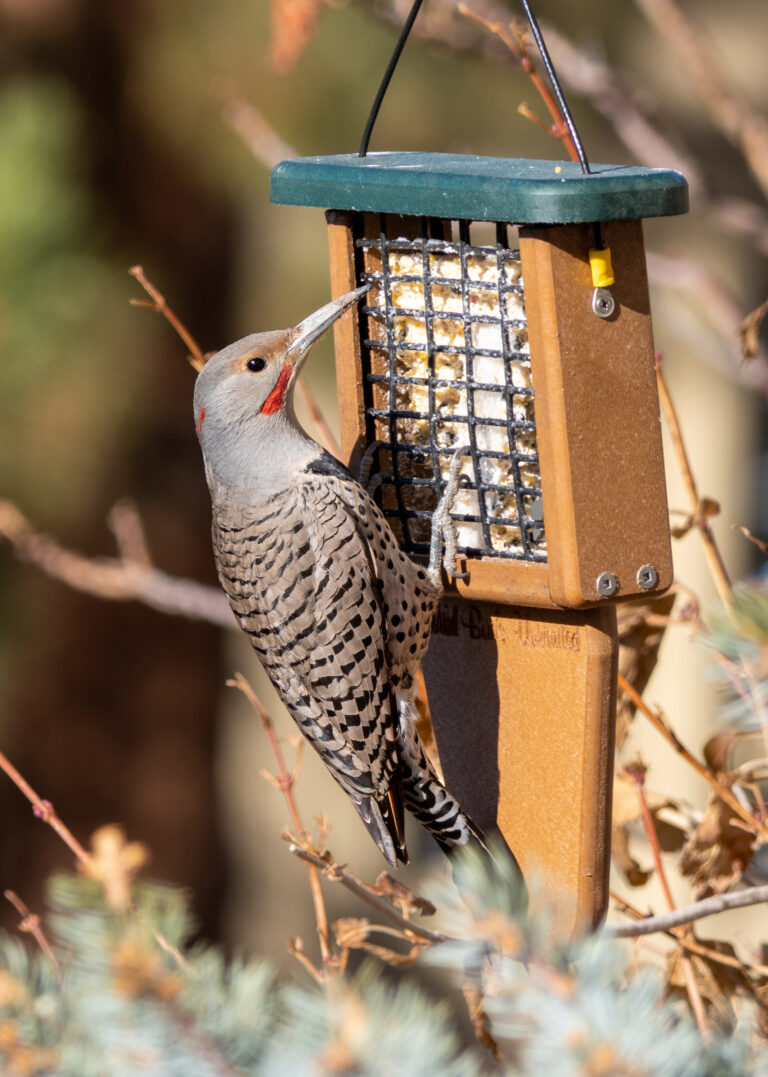
  • Communication and Territory: Woodpeckers, such as flickers, frequently drill on resonant surfaces to communicate their presence to other woodpeckers. This drumming behavior is especially common during the spring breeding season as a way to establish and defend their territory.
  • Foraging for Food: If you notice small, scattered holes, the birds are likely hunting. Both woodpeckers and nuthatches create small holes in siding to find and extract hidden insects.
  • Creating Nesting and Roosting Sites: Woodpeckers and certain nuthatches drill out larger cavities to create nest sites for themselves. These cavities are highly valuable to the local ecosystem and may even be used for nesting in later seasons by other bird species. Nuthatches will also use or enlarge existing holes for nesting or roosting, and they have been known to pull out softer insulation materials like Styrofoam to use as cushion for their nests.

How to Effectively Deter Drilling Birds

Deterrence methods vary depending on the species targeting your home. Implementing these strategies early gives you the best chance of success.

For Woodpeckers and Flickers

  • Use visual startle tactics: Woodpeckers can be effectively startled off by hanging shiny, moving reflective strips, ribbons, or other reflective objects (such as reflective pinwheels or old CDs). Hang these items roughly 6 to 12 inches away from the active drilling site. To keep the birds from growing accustomed to them, make sure to rotate or move the objects every few days.
  • Provide an alternative nesting site: If flickers are actively looking for a place to build a nest, you can distract them by placing a dedicated flicker nest box at a safe distance from the house (ideally 20 to 50 feet away). At the same time, cover the existing hole on your house with flashing or hardware cloth to block access. It is critical to start this process early before a hole becomes well established.
  • Preserve natural snags: A dead or dying tree (a snag) located at a distance from your house can naturally draw flickers and other woodpeckers away from your siding. Leave these trees standing if they do not pose a safety hazard.

For Nuthatches

  • Physical exclusion is key: Reflective strips will generally not work to deter nuthatches. Instead, exclude them from the surface by installing bird netting or 1/4 to 1/2-inch hardware cloth placed tautly a few inches off the siding.
  • Seal access points: Seal any existing holes with heavy-duty tape or flashing, or fill them using non-toxic fillers (consult with a professional pest control agency if needed). Be sure to seal or fill other nearby crevices where insects love to hide, removing their food source entirely.

What Does Not Work

Save your time and resources by avoiding methods that have been proven ineffective. Birds are highly intelligent and will quickly learn that these common quick-fixes pose no real threat to them:

  • Plastic fake owls, rubber snakes, or other stationary predator decoys.
  • Audio recording devices that mimic predator sounds like owls.
  • Ultrasonic noise-producing devices.
  • Smell-based deterrents, including capsaicin, garlic, or rose oil.
  • Standard commercial bird repellents.
  • Leaving radios on or playing human sounds.
  • Nest boxes that are placed too close to the house structure.


What NOT to Do: Legal and Safety Reminders

When managing wildlife issues around your property, safety and legality must always come first.

  • Avoid sticky repellents: Do not use sticky bird repellents under any circumstances. These commercial gels can easily trap, severely injure, or inadvertently kill birds.
  • Respect the law: Do not harm or kill the birds pecking at your house. These species are protected by both Federal and State laws, making it illegal to harm them. Focusing on humane exclusion and distraction is the best way to protect your home while keeping our local wildlife safe.