Realtors

New Residents

Managing Life with Coyotes in The Village: A Practical Overview

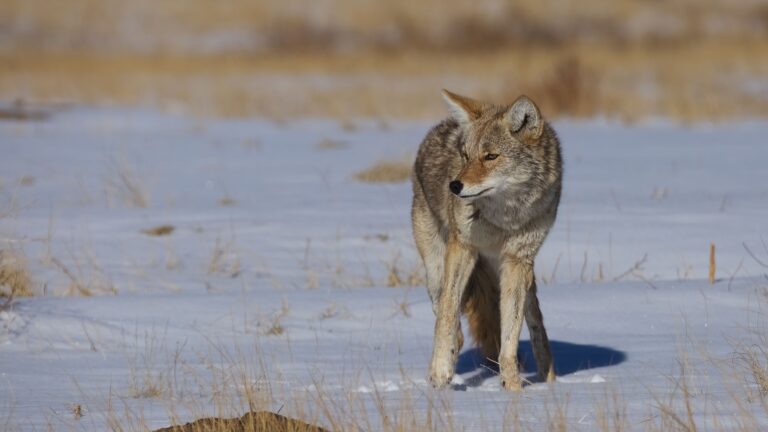
Living in The Village at Castle Pines gives us the incredible privilege of being surrounded by rugged beauty and diverse wildlife. Among our wild neighbors are coyotes—native, highly adaptable animals that possess an incredible ability to thrive in almost any environment. For an in-depth look at coyote dynamics across the state, Colorado Parks and Wildlife offers an informative online resource portal.

Understanding coyote behavior and adopting a few proactive habits allows us to safely protect our families and pets while respecting our local ecosystem.

Understanding Coyote Behavior

Coyotes are active year-round, and while they are most visible during the quiet hours of dawn and dusk, daytime sightings are completely normal. You can expect to see them a bit more frequently during their breeding season, which runs from January to March, as well as during the pup-rearing season from April to June.

When moving through the area, coyotes may travel completely alone, in pairs, or within small family groups. While they typically go out of their way to avoid humans, they can easily lose their natural fear if easy food sources become available. During the busy spring pup season, they often look for secure places to den, utilizing spots under residential decks, porches, rocks, or other natural cavities. It is also helpful to note that coyote populations are entirely self-regulating based on the availability of local food and territory.

Why Coyotes Frequent Our Neighborhoods

Suburban environments often provide unintended invitations that draw coyotes close to our homes:

  • Abundant food options: Leaving out unsecured trash, pet food, compost, fallen fruit, or allowing local rodent populations to multiply creates an easy food source for coyotes.
  • Convenient travel corridors: Our community’s beautiful greenbelts, walking trails, open spaces, and paved streets serve as perfect, unobstructed travel routes.
  • Pet attractants: Leaving small pets unattended outdoors can unfortunately attract the attention of a passing coyote.
  • Habituation: Regular human behaviors can unintentionally habituate coyotes to residential areas, steadily eroding their natural boundary of fear.

The Ecological Value of Coyotes

Though seeing a coyote near your property can be startling, these animals play an irreplaceable role in keeping our foothills environment healthy:

  • Built-in pest control: Coyotes act as nature’s clean-up crew, helping to control local pest populations such as mice, voles, and rabbits.
  • Ecosystem balance: Their presence directly supports a well-balanced, thriving ecosystem.
  • The failure of lethal control: Attempting lethal control is highly ineffective; eliminating coyotes can actually trigger an increase in their reproduction rates and simply allows new coyotes to move into the open territory.
  • Relocation boundaries: Additionally, catching and relocating coyotes is prohibited by law in the state of Colorado.

How to Coexist Safely

Coexisting with coyotes comes down to simple, everyday actions that keep wild animals wild and our domestic environments secure.

Reduce Attractants Around Your Home

  • Tightly secure all outdoor trash cans with tight-fitting lids.
  • Always bring pet food indoors rather than leaving bowls outside.
  • Minimize birdseed spillage under your backyard feeders to avoid drawing in rodents and predators.
  • Pick up any fallen fruit from your yard and keep your outdoor grills clean.
  • Seal off open crawl spaces and the gaps underneath your decks or porches to prevent coyotes from establishing a den.

Protect Your Pets

  • Keep your cats indoors and closely supervise your dogs when they are outside, particularly during the high-activity hours of dawn and dusk.
  • Always walk your dogs on a sturdy 6-foot leash when utilizing community trails, and pick up small pets if a coyote is nearby.
  • Ensure your household pets stay fully current on their vaccinations.

What to Do During a Coyote Encounter

  • Stay completely calm, stand your ground, and do not run, as running can trigger a coyote’s natural chase instinct.
  • Maintain a safe distance while keeping direct, confident eye contact with the animal.
  • Practice “hazing” if the coyote seems too comfortable: make yourself look large, be loud, stand tall, and throw objects nearby to scare it away.
  • Keep children and pets close to your side, and carry small pets or use only a very short leash.

When to Contact Emergency Services

While spotting a coyote moving through an open space is a normal part of living in our environment, certain behaviors require professional attention. Please contact Castle Pines Emergency Services immediately at 303-688-6447 if you observe:

  • A coyote displaying aggressive or unusually bold behavior toward people or leashed pets.
  • Coyotes actively denning in high-conflict residential locations, such as under a porch or backyard deck.